Selbstgeführte Kajakexpedition
Saint Anna Archipelago, Sweden
26 Mai—30 September
5—8 Tage
2—12 Personen
Anfänger willkommen
12+ Jahre begleitet von einem Erwachsenen, Schwimmer
8 700 SEK+
Du wirst schnell umzingelt sein von Wasser und Wildnes.
Paddle an bewaldeten Inseln und kleinen felsigen Schären vorbei. Vögel im Überfluss. Am späten Nachmittag halte Ausschau nach dem perfekten Platz und mach die Insel für die Nacht zu deinem eigenen kleinen Reich. Nimm ein Bad im Meer, koche köstliche Mahlzeiten, genieße herrliche Sonnenuntergänge. Du bist ganz allein in der Wildnis, und es ist einfach wunderschön!
Sei ein Entdecker. Wir kümmern uns um die praktischen Aspekte.
Komm einfach in Norrköping an. Die gesamte Ausrüstung, die du benötigst – wirklich alles – ist bereits am Startpunkt vorbereitet. Das vorbestellte Essen wurde gerade im Supermarkt abgeholt. Dein Guide holt dich ab und fährt mit dir über die kurvigen Landstraßen in Richtung Küste. Das Briefing dauert ein paar Stunden – wir möchten sicherstellen, dass du dich selbstbewusst und gut informiert fühlst, bevor du dich ins abgelegene Insel-Labyrinth aufmachst.
Für die beste Erfahrung, brauchst du die besten Werkzeuge.
Ausrüstung der Spitzenklasse, der du vertrauen kannst und die mit äußerst strengen Routinen gepflegt wird – das ist unser Ding. Damit du Spaß hast und es bequem hast, egal was kommt! Die Launen des Wetters. Auf vollkommen wilden Inseln leben. Das Meer durchqueren, ob glatt, wellig oder irgendwas dazwischen.
Klar, es ist selbstgeführt, aber wir sind trotzdem bei dir, irgendwie.
Jeden Morgen schicken wir einen Wetterbericht, und wir sind nur einen Anruf entfernt. Auf deinem Abenteuer wirst du viel Einsamkeit und Wildnis erleben, aber die Gegend ist seit Jahrhunderten auch die Heimat von Fischern, Bauern und Seeleuten. Unser detaillierter Reiseführer hilft dir beim Erkunden. Mit mehreren Möglichkeiten, wo du deine Reise beenden kannst, kannst du es einfach auf dich zukommen lassen und unterwegs entscheiden. Pure Freiheit!
Youths: –1,000 SEK
Deposit: 1,000 SEK at the time of booking
* Pay in full before March 31st
** 7 people or more
Vorauszahlung: 1 000 SEK zum Zeitpunkt der Buchung
Ein Komplettpaket vom Anfang bis zum Ende
Das Einzige, was du mitbringen musst, ist deine eigene Kleidung. Vier verschiedene Abholorte zur Auswahl, sag uns einfach einen Abend vorher Bescheid.

Essen bequem über unseren Online-Shop bestellen
Kajak fahren und wild campen
Hin- und Rücktransfer Norrköping–Saint Anna
Einweisung mit Guide, 2.5–3 Stunden
qualitativ hochwertige Ausrüstung
Unser detaillierter Reiseführer über das Gebiet
Handy für 24/7 Unterstützung
Daten
Zeitraum: 26. Mai—30. September
Ankunft: Montag—Samstag
Abreise: Jeder Tag der Woche
Transferzeiten
Abholung: 10:00 Uhr am Bahnhof oder in einem Hotel/Hostel in Norrköping
Rückfahrt: 17:00 Uhr in Norrköping.
Bitte beachte, dass die Abhol- und Bringzeiten nicht flexibel sind.
Voraussetzungen
- schwimmen können
- Gewichtsbeschränkung: 120 Kilo
- Altersbegrenzung: 12 Jahre in Begleitung eines Erwachsenen
- Fitnesslevel, niedrig/mittel
- Stabile Doppelkajaks für alle Anfänger und Fortgeschrittene. Für ungerade Gruppen liefern wir stabile Einzelkajaks. Schmale Einzelkajaks sind nur für sehr erfahrene Kajakfahrer erhältlich.
Zahlung
1.000 SEK Anzahlung pro Person zum Zeitpunkt der Buchung, der Restbetrag ist 2 Wochen vor deiner Abreise fällig.
Stornierung
Volle Rückerstattung bis 2 Wochen vor deiner Abreise. Keine Rückerstattung weniger als 2 Wochen vor der Tour.
Rabatte
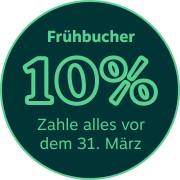
Frühbucherrabatt: − 10%, begleiche den Restbetrag der Reise (ohne Essen) vor dem 31. März.
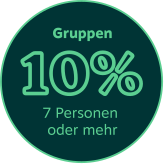
Ermäßigung für Gruppen: − 10%, wenn 7 oder mehr Personen.
Jugendrabatt: −1.000 SEK pro Jugendlichen im Alter von 12—17 Jahren.
Buche sowohl ohne Transfer als auch ohne Essensbestellung: −1.000 SEK pro Person.
Essen bestellen
Du hast Zugang zu unserem umfassenden Bestellsystem für Lebensmittel, wähle aus Hunderten von Artikeln. Wir kaufen ein und packen. Du zahlst den Selbstkostenpreis, genau wie im Supermarkt. Wir haben viele Lebensmittel für vegane/vegetarische, laktosefreie und glutenfreie Ernährung im Angebot. Zahlung ist bei der Ankunft per Debit-/Kreditkarte fällig.
Nützliche Links


Alles was du wissen musst, und noch mehr
Wir haben die wichtigsten Informationen für diese Tour zusammengestellt. Wenn du tiefer eintauchen möchtest, dann gibt es noch mehr zu Entdecken unter Führer & Artikel.
Frequently Asked Questions
Yes, absolutely. This self-guided kayak trip in Sweden is a great fit for beginners – as long as you can swim, have a bit of common sense, and are happy being outdoors in changing weather.
You don’t need any previous kayaking experience. Before you set off, we give you a thorough 2.5–3 hour briefing covering paddling technique, navigation, weather, camping, safety and how to plan your route. Beginners and intermediates use stable double kayaks, which are very difficult to capsize and well suited for multi-day trips with food and camping gear. Narrow single kayaks are only for experienced paddlers.
Saint Anna is one of the best places in Sweden for a first sea kayaking expedition. The archipelago is made up of thousands of islands, so you can choose sheltered routes through narrow passages and calm waters instead of heading into more open areas. There are no tides, no currents and no big ocean swell to worry about. Conditions are usually very manageable, and if it gets breezy, you can simply adapt your route.
You’re self-guided, but not just sent off into the wild and wished good luck. We give you a detailed sea chart and guidebook, a mobile phone for support, and we send you the weather forecast every morning. If the weather is less suitable for heading further out, you can stay in the more sheltered inner and middle archipelago, take a shorter day, or enjoy a slower morning at camp.
So yes – this trip is beginner-friendly. But it’s still a real wilderness adventure. You’ll be navigating, choosing camp spots, cooking outdoors and making sensible decisions about weather and distance. That’s exactly what makes it so rewarding.
The trip includes everything you need for a self-guided kayak expedition, except food and personal clothing.
We provide all kayaking equipment: kayak, paddle, spraydeck, life vest, water-repellent paddle jacket, dry bags, bilge pump, first aid kit, deck compass, hand compass, sea chart and guidebook. For beginners and intermediates, we use stable double kayaks that are well suited for longer trips with camping gear and food.
All camping and cooking gear is included too: Hilleberg tent, sleeping bag, inflatable mattress, pillow, camping chair, Trangia stove with fuel, cooler bag, water bottles and canteens, headlamp, tarp, cooking utensils, eating utensils, dishwashing kit and other useful camp equipment.
Before you set off, you get a thorough 2.5–3 hour briefing covering paddling technique, navigation, weather, safety, route planning, camping and how to use the equipment. During the trip, we send you daily weather reports and provide a basic mobile phone so you can reach us if you need advice or support.
Transport is also included. We pick you up in Norrköping on your first day and drop you back there after the trip. You also have four end points to choose from, and you don’t need to decide which one until your last evening. This means you can keep your route flexible, adapt to your pace, and avoid backtracking to where you started. We also store any luggage you don’t want to bring kayaking and bring it to your final pickup point.
Food is not included in the tour price, but you order everything in advance through your personal Trip Planner. You pay supermarket cost price, and we shop, pack and organise it for you before departure.
So in short: we provide the gear, briefing, weather support, transport and flexible pickup logistics – you bring your clothes, personal items and a sense of adventure
The weather in the archipelago changes often, so you should be prepared for a bit of everything: sunshine, calm water, clouds, breezy afternoons and sometimes rain. That’s part of the experience – and also why good gear and flexible route planning matter.
Paddling conditions in Saint Anna are generally very beginner-friendly. It’s more like paddling on a large lake than on the open sea. There are no tides, no strong currents and no big ocean swell, because the many islands break up the wind and waves. The water can get choppy when it’s breezy, but you can usually choose more sheltered routes between the islands.
Wind is the main thing that affects your day. Paddling with a tailwind can feel easy, while paddling into a headwind can be slower and more effortful. The wind direction often matters more than the wind strength itself. During your briefing, we’ll teach you how to plan routes using the sheltered side of the islands, and during the trip we send you today’s and tomorrow’s weather forecast every morning.
The area has three different zones. The inner archipelago, closer to the mainland, has larger forested islands and narrow passages, so it’s usually the most sheltered. The middle archipelago has clusters of smaller islands with wider straits, giving you a good mix of shelter and open views. The outer archipelago is made up of tiny barren skerries closer to the open sea, and is much more exposed – wonderful in calm weather, but best avoided in stronger winds.
Summer temperatures vary a lot. A typical day might be warm and sunny, around 20–26°C, but you can also get cooler rainy days around 17°C or hot days above 30°C. Rain usually passes fairly quickly, and we provide a water- and wind-resistant paddle jacket plus a spraydeck to keep you comfortable in the kayak.
A self-guided kayak expedition means you paddle, navigate and camp independently – but we take care of the tricky logistics and stay available for support throughout the trip.
You start in Norrköping, where we pick you up at the train station or your accommodation and drive you to our launch in Saint Anna. When you arrive, all your kayaking and camping gear is ready, and your pre-ordered food has been shopped and packed for you. Before you set off, your instructor gives you a thorough 2.5–3 hour briefing covering paddling technique, safety, navigation, weather, camping routines and how to use the sea chart and guidebook.
Once you’re on the water, the trip is your own. You choose where to paddle, how far to go each day, which points of interest to visit, and which island to make your home for the night. Saint Anna is ideal for this kind of freedom: with thousands of islands close together, you can adapt your route as you go, finding sheltered passages in breezier weather or heading further out when conditions are calm.
You’re self-guided, but not unsupported. We provide a mobile phone for support, and each morning we send you the weather forecast for today and tomorrow. If you need advice, have a practical problem, or just want reassurance about your route, we’re only a phone call away.
You also don’t need to follow a fixed route or return to the same place you started. There are four pickup points, and you only need to let us know where to collect you the evening before your last day. That way, your route can follow the weather, your energy and whatever catches your curiosity along the way.
So in short: we prepare you, equip you and support you – then you get the freedom of a real kayaking and wild camping adventure on your own terms.
You don’t need to bring any specialist gear – we provide the kayaks, camping equipment, cooking gear, dry bags, life vests and paddle jackets. What you need to bring is mainly personal clothing and toiletries.
For paddling, bring comfortable clothes that can get a little wet: a short or long-sleeved top, shorts or quick-dry trousers you can roll up, and neoprene shoes or strap-on sandals for getting in and out of the kayak. The rocks can be slippery, and you’ll step into shallow water when launching and landing. Also bring a sun cap, sunglasses and sunscreen.
For camp life, pack normal outdoor clothes: trousers, long-sleeved tops, shorts, t-shirts, a warm sweater, a light jacket, rain clothes, covered shoes, swimsuit, towel and toiletries.
If you’re joining in May, June or September, bring a few warmer layers too: long johns, a beanie, gloves and preferably a light down jacket or similar warm layer. Even when the days are mild, mornings and evenings can feel chilly by the water.
You’ll repack your personal items into our dry bags before departure, and we’ll store your luggage safely while you’re kayaking. Anything you don’t want to bring on the water will be brought to your end point on the last day.
Wild camping means you choose your own island, set up camp in nature, and leave it exactly as you found it.
There are no facilities whatsoever – no toilets, showers, running water, picnic tables or designated pitches. That’s the whole point. You’re camping in the wild, on your own little island, surrounded by sea, rocks, forest and sky.
In Sweden, the Right of Public Access allows you to camp in the wild, as long as you do it responsibly. In Saint Anna, that means you can paddle until you find a beautiful island that suits you for the night – maybe flat rocks by the water, a sheltered spot in the forest, or a little bay with a sunset view. You don’t need to use designated campsites.
We provide all the camping gear you need, including Hilleberg tents, sleeping bags, inflatable mattresses, pillows, camping chairs, stove, cooking gear, water canteens and dry bags. The tents are free-standing and easy to pitch, whether you choose flat rocks or softer ground.
Camp life is simple, but very comfortable by wilderness standards. You cook your meals on a Trangia stove, use the brackish sea water for washing dishes and bathing, and enjoy your island for the night. Your toilet is a spade and a hole in the forest – we’ll explain exactly how to do this properly during the briefing.
The main rule is: don’t disturb and don’t destroy. Don’t leave any rubbish, respect bird sanctuaries and wildlife, and leave no trace when you paddle away in the morning.
Fires are restricted. We don’t allow fires in July or August. In June and September, fires are only allowed in the provided pop-up grills, and only if there is no fire ban. Fires directly on the ground or on the rocks are never allowed.
So in short: wild camping is one of the best parts of the trip – your own island, your own camp, and total freedom, as long as you treat the archipelago with care and respect.
Yes – Saint Anna is a very safe and beginner-friendly area for sea kayaking, as long as you respect the weather and make sensible route choices.
The archipelago is much more sheltered than an open-coast paddling area. There are no tides, no strong currents and no big ocean swell to plan around. Instead, you paddle through a maze of islands, skerries and narrow passages, which means you can usually choose a route that suits the conditions. If it’s calm, you can head further out toward the outer archipelago. If it’s breezy, you stay in the more protected inner and middle zones, where larger forested islands break up the wind and waves.
That said, it’s still a real outdoor adventure. The main safety factor is wind. Paddling into a headwind can be tiring, and the outer skerries are much more exposed than the sheltered inner archipelago. We cover this carefully during your briefing, help you understand the forecast, and send you today’s and tomorrow’s weather report every morning. Sometimes the best decision is simply to take a shorter route, stay close to the sheltered side of the islands, or enjoy a slower day at camp.
You’re also well equipped. We provide stable kayaks, life vests, paddle jackets, spraydecks, sea chart, compass, first aid kit, bilge pump, dry bags and a basic mobile phone for support. The self-guided trip includes a 2.5–3 hour briefing before departure, covering paddling technique, navigation, safety, camping and route planning. The whole area has mobile reception, and in an emergency you call 112, Sweden’s emergency number.
Accidents are very rare here. In 20 years, we’ve only had to call the coast guard once, for an allergic reaction to a hornet sting. Most problems, if they happen at all, are small and practical: broken equipment, minor medical issues, or guests wanting advice on wind and route choice. In those cases, we can assist by phone and, when needed, arrange help by boat taxi, our boat or kayak.
So yes, sea kayaking in Saint Anna is safe for beginners – not because nothing can ever happen, but because the area is sheltered, the risks are manageable, and you have the gear, briefing and support to make good decisions along the way.
Getting here from Stockholm is very easy. Take the train from Stockholm Central or Stockholm Arlanda Airport to Norrköping, and we’ll pick you up there on the first morning of your trip.
The train journey takes around 1.5 hours from Stockholm Central and around 2 hours from Arlanda Airport. We pick you up at 10:00 from Norrköping train station, or from any hotel, hostel or Airbnb in Norrköping. You can either travel down from Stockholm the same morning, or arrive the day before and spend a night in Norrköping.
On your last day, we guarantee to drop you back in Norrköping by 17:00 at the latest, so you can book any train departing from 17:00 onwards.
Check out SJ for train tickets. Best is to download the app, then you have your tickets ready to go in your phone.
You go to the bathroom the old-school wilderness way: with a small spade and a hole in the forest.
We provide the spade, and during the briefing we explain exactly how to do it properly. Choose a discreet spot well away from camp, paths, water and any place where others might land or spend time. Dig a small hole, do your thing, and bury everything properly afterwards, including toilet paper.
There are no toilets or facilities when you’re wild camping on the islands, so this is simply part of the experience. It may feel a little unfamiliar at first, but most people get used to it very quickly.
The important thing is to be respectful and leave no trace. Camp spots in the archipelago are beautifully clean and wild, and we want to keep them that way for the next paddlers and the wildlife.
You don’t need to be particularly fit to do this trip. As long as you’re reasonably healthy and happy being outdoors, you’ll be fine.
Kayaking is surprisingly efficient, and you decide your own pace and how far you want to paddle each day. You don’t need to cover long distances unless you want to. Most guests paddle around 6–18 km per day, but that includes plenty of breaks, lunch stops, swims, exploring islands and visiting points of interest. In a double kayak, a fairly relaxed pace is usually around 3–4 km per hour.
Some days may be a little breezier than others, which can make paddling feel slower or more effortful. Luckily, Saint Anna gives you a lot of flexibility. With thousands of islands close together, you can often choose a more sheltered route, stay close to the islands, plan a shorter day, or enjoy a slower morning at camp.
The trip does involve normal outdoor activity: getting in and out of the kayak, carrying gear short distances, setting up camp, walking on rocks and managing camp life. You don’t need to be athletic, but you should be comfortable moving around in nature and spending several days outdoors.
We list a 120 kg weight limit, but it isn’t set in stone and it isn’t really about the kayak’s carrying capacity. It’s mainly about whether you can sit comfortably in the kayak cockpit. Body shape and height make a big difference here – for example, if you’re very tall, it may be absolutely fine to be above the listed limit. Just get in touch with us before booking so we can advise you properly.
In short: this is not a fitness challenge. Take your time, choose sensible routes, and paddle at your own pace.
The trip starts in Norrköping, where we pick you up at 10:00 on your first day – either at the train station or from any hotel, hostel or Airbnb in town. From there, we drive you to our launch in the Saint Anna Archipelago where you’ll get your gear, food, kayaks and full briefing before setting off.
The trip doesn’t have one fixed end point. You have four pickup points to choose from, spread through the Saint Anna & Gryt archipelagos. You don’t need to decide where you’ll finish until the evening before your last day, which gives you lots of flexibility to adapt your route to your pace and what you feel like exploring.
That means you don’t have to paddle a loop or backtrack to where you started. You can travel through the archipelago and finish at whichever pickup point makes most sense for your route.
On your last day, we pick you up from your chosen end point and drive you back to Norrköping, where we guarantee drop-off by 17:00 at the latest.
You use the brackish sea water for both bathing and washing dishes.
For washing yourself, it’s very simple: swim, rinse off in the sea, or have a quick wash by the water. The Baltic Sea around Saint Anna is brackish, meaning it’s only lightly salty, so it feels much fresher than ocean water.
Biodegradable shampoo and body wash made for salt water is available in the food order.
For dishes, you also use sea water. We provide a dishwashing kit and biodegradable dish soap, and during the briefing we’ll explain the best way to wash up without leaving food scraps or mess behind. Scrape plates and pans properly first, use as little soap as possible, and make sure no food waste is left at camp or in the water.
The main thing is to keep it simple and respectful: don’t leave scraps behind and leave your island just as clean as you found it.
For the best experience, we usually recommend at least 5 days.
That gives you enough time to settle into the rhythm of the archipelago: paddling for a few hours, stopping for lunch on a sunny rock, exploring a village or lookout, finding a beautiful island for camp, and not feeling rushed if you decide to take a shorter day.
The Saint Anna & Gryt archipelagos are perfect for a flexible multi-day route. The area is big enough to explore for much longer, but compact enough that in 5–6 days you can experience a lovely mix of sheltered inner passages, lush middle archipelago islands and, if conditions are calm, the wild outer skerries closer to the open sea.
A shorter trip can still be wonderful, but the self-guided expedition is really best when you have 5 days or more. You’ll have time to visit points of interest, take a few detours and build in a bit of flexibility without needing to rush through the experience.
If you’re short on time, have a look at our Kayaking Short-Break instead. It’s a 4-day trip designed to give you a proper taste of kayaking, wild camping and the Saint Anna Archipelago without needing a full week.
If you have the time and really want to sink into the wilderness feeling, 7 or 8 days is fantastic. You can paddle more slowly, take detours, spend an extra night on a favourite island and explore both Saint Anna and Gryt more deeply.
So in short: 5–6 days is the sweet spot for most people. Choose 7–8 days if you want a slower, deeper adventure, and choose our Kayaking Short-Break if 4 days is all you can fit in.
Yes. You can drive directly to our launch in Saint Anna instead of using the transfer from Norrköping.
If you’re coming by car, we meet you at the launch at 11:15 on your first day. There is safe parking available while you’re out kayaking.
The easiest route is to aim for Söderköping, then take road 210 following signs for S:t Anna. After you pass the bridge Lagnöbron, continue for about 500 metres and turn left by the sign for Mons Skärgårdsby. From there it’s another 5–7 minutes before turning onto the small gravel road down to the water.
Please follow our directions rather than simply looking up Do the North on Google Maps – that will take you to our base, not the kayak launch.
If you drive to the launch and also opt out of our food ordering service – meaning you shop and bring all your own food – you’ll receive a 1,000 SEK per person discount.
You’ll still have the same flexible trip setup with several possible end points. We’ll arrange the practical details so you can finish at your chosen pickup point and get back to your car.
Our season runs from late May through late September, and the best time to kayak in Saint Anna Archipelago depends on what kind of experience you’re after. Every part of the season has its own charm.
Late May to mid June
Early summer is beautifully green, lush and full of life. The days are incredibly long, flowers are blooming, and there’s lots of bird activity around the islands.
Pros: Very green and lush, lots of birdlife, almost endless daylight.
Cons: The water is usually still quite cold and most cafés, restaurants and small island establishments are closed until Midsummer.
Late June to mid August
This is classic Swedish summer, and your best bet for warm, sunny weather. The water is comfortable enough for swimming, all the small archipelago establishments are open, and you may get those glorious days of sunbathing on warm rocks after a swim.
Pros: Warmest weather, swimmable water, long days, all island establishments open.
Cons: Afternoons can get breezy, and there may be some mosquitoes.
Mid August to mid September
This is a favourite among many kayakers. The weather is often calmer and more settled, the water usually stays warm for a while, and the sunsets can be absolutely gorgeous.
Pros: Often calm days, beautiful long sunsets, usually still possible to comfortably swim at least into early September.
Cons: Most establishments close toward the end of August, evenings are cooler, and many bird species have migrated south.
Late September
Late September has a completely different feel: crisp air, autumn colours, golden light and a wonderful sense of stillness. It can be stunning, and it’s best suited if you have some kayaking and camping experience.
Pros: Autumn colours, golden light, amazing solitude.
Cons: The water is getting cold, and if you’re unlucky the weather can be wet and windy.
During the briefing, we teach you everything you need to know to head out on your own self-guided kayak expedition.
First up, you pack your personal belongings into dry bags. Anything you don’t want to bring kayaking can be left with us, and we’ll bring it to your end point on the last day.
The briefing takes around 2.5–3 hours and starts with the practical stuff: how to pack and load your kayak, how to use the equipment, how to get in and out safely, and basic paddling technique. You don’t need previous kayaking experience – we’ll show you how to paddle efficiently, steer, and handle the kayak as a pair if you’re in a double.
We recommend having lunch during the briefing. In the food order, we have easy first-day lunch options like ready-made baguettes and salads, so you don’t need to start cooking before you’ve even launched.
We also spend a good chunk of time on navigation. You’ll learn how to use the sea chart, deck compass and hand compass, how to take out a route, and how to compare what you see around you with the chart. We’ll also go through the guidebook, which includes tips on points of interest, beautiful passages, water refill spots, rubbish drop-off points, camp routines, practical advice, and information about the nature, wildlife, geology and history of the islands.
Weather and route planning are important too. We’ll explain how to read the forecast, how to choose sheltered routes, when to stay in the inner or middle archipelago, and when conditions are good for heading further out. During your trip, we’ll also send you daily weather reports so you can keep adapting your plan.
We’ll go through camping routines as well: where you’re allowed to camp, how to choose a good camp spot, how to use the tent and stove, how to handle fresh water, rubbish, bathroom needs and the Right of Public Access. We’ll also cover bird sanctuaries, fire rules and how to leave the islands exactly as wild and clean as you found them.
Finally, we cover safety and support: what to do if the weather changes, if equipment breaks, if someone feels unwell, or if you simply want advice. You’ll have a basic mobile phone with you, and we’re available throughout the trip.
Yes. There are several places in the archipelago where you can drop off rubbish along the way, and these are marked on your sea chart.
You’ll still need to pack and carry your rubbish with you until you reach one of those spots. We’ll explain during the briefing how to manage waste on the trip and where the rubbish bins are.
We ask you to separate aluminium and plastic, as there are recycling stations in some locations. And of course, never leave anything behind on the islands – not food scraps, packaging, tissues or anything else.
The rule is simple: whatever you bring in, you bring out. Your camp spot should look untouched when you paddle away.
Yes. We store your luggage safely while you’re out kayaking.
Before the briefing, you’ll repack the personal items you want to bring into our dry bags. Anything you don’t need on the water – suitcases, backpacks, travel clothes and other belongings – is left with us.
We’ll bring your stored luggage to your chosen end point on the last day, so it’s waiting for you when we pick you up.
We provide drinking water at the start of your trip, and there are places to refill along the way.
At the launch, you’ll receive 8 litres per person in water canteens, plus 1 litre per person in a drinking bottle – so 9 litres per person in total. This is usually enough for the first 2–3 days, depending on the weather, how much you cook and how much water you drink.
There are a few places in the archipelago where you can refill your water supply, and these are marked on your sea chart. We’ll go through them during the briefing, so you can plan your route with water stops in mind.
You don’t need to filter or purify sea water. The Baltic Sea around Saint Anna is brackish and fine for bathing and washing dishes, but not for drinking. For drinking and cooking, use the fresh water we provide and refill at the marked spots along the way.
No, unfortunately this trip isn’t available for solo travellers.
For our self-guided kayak expedition, you need to be at least two people. We don’t put solo travellers together with other guests on this trip, so you’ll need to book with a travel companion.
The reason is safety. Not because the kayaking itself is especially dangerous – Saint Anna is a sheltered and beginner-friendly paddling area – but because you’ll be out in the wild for several days. Slips and falls, allergic reactions, illness or other unexpected situations can happen anywhere, and it’s always much safer to be at least two people when you’re travelling independently in nature.
If you’re travelling on your own, have a look at our Guided Kayak Adventure instead. You’ll still get the full kayaking and wild camping experience in the Saint Anna Archipelago, but with two guides and a small group to share the adventure with.
Food is not included in the tour price, but we make it very easy to organise.
After booking, you’ll get access to your personal Trip Planner, where you order all your food and drinks in advance through our online food shop. You pay cost price, the same as at the supermarket – we don’t add a markup. Before your trip, we shop, pack and organise everything for you, so your food is ready when we pick you up.
You’ll have hundreds of items to choose from, including fresh ingredients, snacks, drinks, beer and wine, plus easy first-day options like ready-made baguettes and salads. We also provide a good selection of dried herbs, spices and condiments free of charge, so you don’t need to buy full-size packs of everything.
We provide the cooking gear, stove, fuel, water bottles and cooler bag. If you’re paddling in double kayaks, our mylar-lined cooler bag keeps food cold for around 3–4 days. If your group uses single kayaks only, you’ll have a regular cooler bag that stays cold for around 1–2 days, so you’ll need to plan your meals accordingly.
Check out our Guide to Food Planning and our Outdoor Recipes.
No – there’s no set paddling route, and that’s one of the best things about the trip.
Before you set off, we’ll go through a rough plan with you during the briefing. We’ll show you beautiful areas, suitable passages, points of interest, water refill spots, rubbish drop-off points and possible end points. You’ll also have our sea chart and guidebook with you, so you have plenty of information to plan your days.
Once you’re out there, the route is yours. You decide how far to paddle each day, which islands to explore and where to camp. Weather will often have a say in what makes sense, so it’s much better not to be locked into a fixed itinerary. If conditions are calm, you may head further out towards the outer skerries. If it’s breezy, you can stay in the more sheltered inner and middle archipelago.
You also don’t need to paddle back to where you started. We have four end points to choose from, and you only need to let us know which one you’ll finish at on your last evening. This keeps the route flexible and means you don’t have to backtrack.
So in short: we help you plan, but you don’t follow a fixed route. You adapt the trip as you go, depending on the weather, your pace and what you feel like exploring.
Most guests paddle around 6–18 km per day, depending on the weather, wind direction, how many breaks they take and how much they want to explore along the way. The most common distance is around 10–12 km per day.
In a double kayak, a fairly relaxed pace is usually around 3–4 km per hour. But you won’t be paddling non-stop. You’ll likely stop for lunch, swims, short walks, points of interest and little island breaks along the way.
Wind makes the biggest difference. A tailwind can make paddling feel easy, while a headwind can be tiring and a lot slower. That’s why we recommend planning your route day by day, using the morning weather forecast and choosing sheltered passages when needed.
Some guests take it very easy and only paddle a short distance before finding a beautiful island to camp on. Others like covering more ground and exploring a larger part of Saint Anna & Gryt. Both approaches work well.
Kayaking in Saint Anna Archipelago is much more about solitude, wild camping and travelling through a dense maze of islands, while Stockholm Archipelago is more accessible, developed and busy.
The Stockholm Archipelago is huge and beautiful, with around 30,000 islands. But those islands are spread out over a gigantic area, and many of them are far apart. It’s also the archipelago closest to Sweden’s capital, which means ferries, guest harbours, restaurants, villages, summer houses and a lively summer atmosphere. It’s a great option if you only have a day or two, or if you want to stay close to Stockholm and get a taste of Swedish archipelago kayaking.
Saint Anna & Gryt are very different. Together, they have around 6,000 islands and islets, but they’re concentrated into a much smaller area – in fact, this is the archipelago in Sweden with the highest concentration of islands in the smallest space. The islands are packed closely together, and large parts of the area are impossible to reach by larger boats. That makes it ideal for kayaking.
In Saint Anna, you can paddle through narrow passages, zig-zag between small islets, and move between the inner, middle and outer archipelago within the same trip. In 5–8 days, you can cover a wonderful cross-section of the area without needing to rush: sheltered forested islands closer to the mainland, lush island clusters in the middle archipelago, and the barren outer skerries closer to the open sea.
The biggest difference is the feeling. Stockholm has a lively summer atmosphere, with lots of people spending time around the islands. In Saint Anna, you’ll barely see anyone for days once you’re out among the islands. There are still lovely cultural stops – old fishing villages, small island establishments, lookouts, homesteads and lighthouses – but most of the journey is uninhabited island wilderness.
Saint Anna is also very flexible for a multi-day trip. Because the islands are so close together, you can adapt your route as you go and choose sheltered passages when needed. You don’t have to follow a fixed loop either – with several possible pickup points, you can let your pace and curiosity shape the journey.
So in short: Saint Anna is best if you want solitude, wild camping, flexible routes and a dense maze of islands that’s perfect to explore by kayak over several days. It gives you the feeling of being deep in the archipelago wilderness, while still having enough shelter, support and route options to make the trip manageable.
For a 5-day trip, food usually cost around 800–1,200 SEK per person, excluding alcohol. It depends on what you choose to order and how lavish you want to be.
You order food through your personal Trip Planner, where you’ll find our online food shop with hundreds of supermarket items. You pay cost price, the same as at the supermarket – we don’t add a markup. We then shop, pack and organise everything for you before the trip.
As a rough idea, simple meals and practical ingredients keep the cost down, while lots of fresh meat, cheese, snacks, drinks, beer and wine will push it higher.
No – there are no tides or strong currents to worry about in Saint Anna Archipelago.
That’s one of the reasons the area is so well suited for self-guided kayaking, including for beginners. You don’t need to plan your day around tide tables, moving water or changing water levels, and you don’t have to carry kayaks and gear up and down a tidal shore. When you stop for a break or camp for the night, you only need to pull the kayaks about halfway out of the water so they’re secure.
There are also no big ocean swells. The thousands of islands break up the wind and waves, so when it gets breezy the water becomes choppy rather than swell-like.
The main thing that affects your paddling is wind. A headwind can make progress slower, while a tailwind can make things feel much easier. During the briefing, we’ll teach you how to plan around wind direction and choose sheltered routes through the islands.
Can't find an answer?
Send an email to Helena:
contact@dothenorth.com
Give us a call:
+46 (0) 707 13 96 09