
Winter Flavours and Fire in Dalarna
Five days of fire cooking, northern flavours and rustic decadence.


Navardalen, Sweden

January and March

5 days, all departures guaranteed

8 guests + 2 guides (wilderness chef and ski touring)

Beginners welcome

18+ yrs

27,200 SEK

A culinary journey led by our wilderness chef.
This indulgent tour is all about where we are. The place. The time of year. We’re in the land of deep boreal forests, frozen lakes and low mountain ridges. In the season of snow, crisp air and stillness. Fire is both our kitchen and our gathering place. For five days, we explore the tastes, traditions and pleasures of winter life in Dalarna – experienced from the inside.
Fire cooking and fireside dinners.
We stay close to our lakeside off-grid cabin in the Navar Valley. Some meals are rustic, going straight from the flames to our plates outdoors – by the cabin fireplace or around a fire in the snow. Others are more delicate, enjoyed inside by candlelight with wood-fired heaters warming the room. We do much of the fire cooking together, while your wilderness chef takes care of the rest as you relax in the sauna or head off on skis with your winter guide.
Ski touring, sauna and winter life.
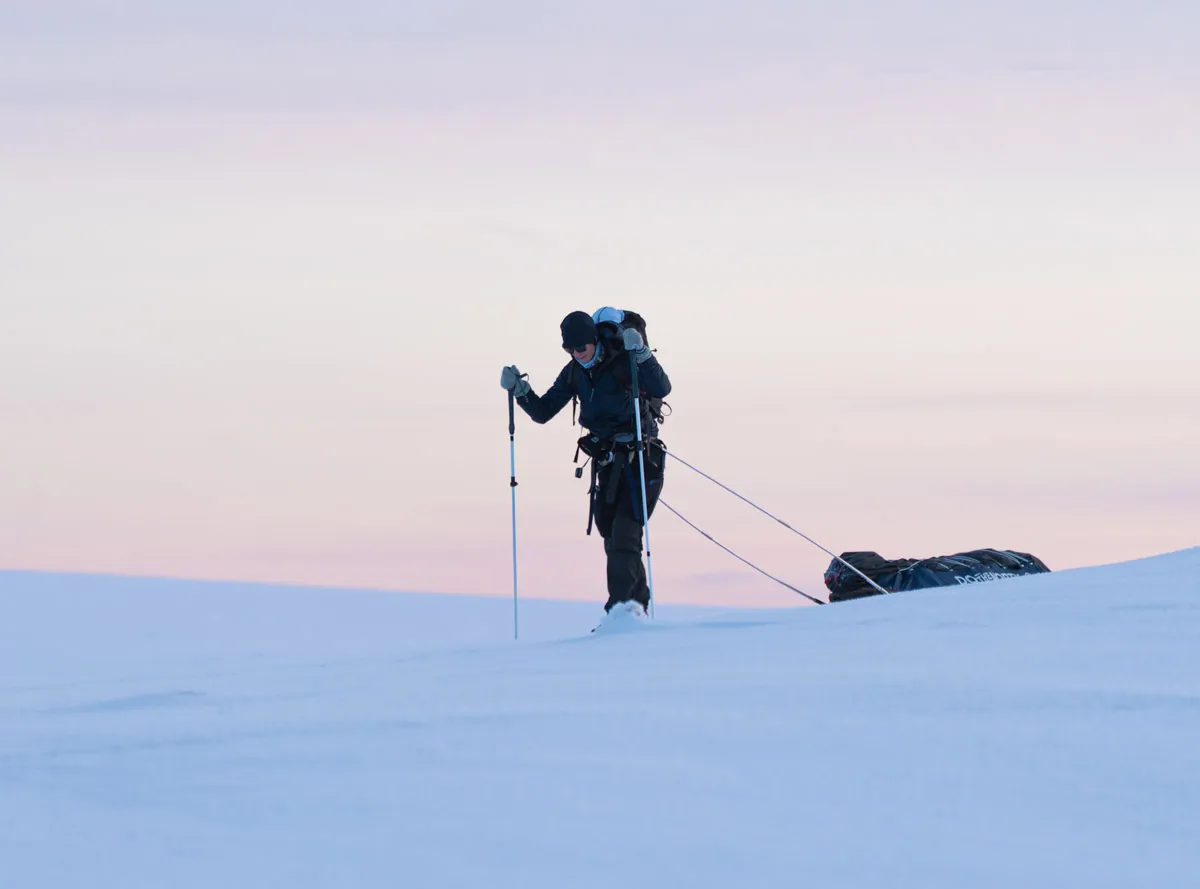
Is there perhaps more to winter than eating? Food is central to this tour, of course, but it’s woven into the many other pleasures of winter life here. One day we head into Norra Mora Vildmark for a slow journey on skis through old-growth forest and across frozen mires. Another afternoon we set out straight from the cabin towards a small frozen lake where a tipi awaits. Sauna and ice plunges become evening rituals. If you’re keen, you can try your hand at ice fishing for Arctic char and trout. And we do sneak in a cocktail or three, some local beer tasting and plenty of other merriment.
Northern ingredients and winter flavours.
Winter as a culinary season? Indeed. Cooking here is shaped by fire, preservation and what the forests and surrounding countryside provide. We smoke reindeer and Arctic char in a smokebox over smouldering logs, roast hardy root vegetables straight on the embers and bake potato waffles in irons among the flames. Cheeses, sausages and salted pork come from nearby farms. Preserved mushrooms, berries and other forest flavours bring brightness from warmer months to our winter table.
Traditional flatbread baking in Älvdalen.
Over a long morning we visit an old village bakehouse in Älvdalen, where we meet a local baker who has rolled a thousand and one flatbreads. She teaches us to roll and bake kavelgris – thin rye flatbreads scented with aniseed and fennel, baked in a huge wood-fired oven. A speciality of this small inland town. We sample some on the spot with messmör, a soft cheese made from caramelised whey. Some we save for later, for dinner at the tipi.

Deposit: 1,000 SEK at the time of booking
A northern culinary adventure
This tour is about diving into the flavours, ingredients, and cooking traditions of Dalarna in wintertime. We go for easier day trips on skis or snowshoes and make an excursion to the traditional bakehouse in Älvdalen.


5 days of cooking, eating, and excursions
4 nights accommodation in off-grid cabin by Lake Navar.
Learn from wilderness chef and winter guide
Local ingredients and cooking methods
Breakfast, lunch, dinners, and alcoholic beverages
Dates
2027
19–23 January
2–6 March
All departures are guaranteed.
Transfer times
Pickup: 17:35 at Mora train stn, day 1
Dropoff: 12:00 at Mora train stn, day 5
Prerequisites
Age limit, 18 years
Fitness level, Low (able to hike in flat terrain)
No ski touring experience required.
Payment
1,000 SEK deposit per person at the time of booking, remaining balance due 6 weeks prior to your departure.
Cancellations
Full refund up until 6 weeks prior to your departure. 50% refund up until 3 weeks prior. No refund less than 3 weeks prior.
Accommodation
Shared twin rooms in cabin.
Dietary restrictions
Limited for this tour, we do serve meat, lactose and gluten.
Useful Links
Food in this part of Sweden has long been shaped by climate, distance and the rhythm of the seasons. Winters are long and the growing season is short, giving rise to a cuisine built on preservation, resourcefulness and careful use of what the forests, lakes and nearby farms provide.
Game and freshwater fish play an important role. Reindeer, forest birds and Arctic char have traditionally been smoked, dried or cured to last through the colder months, while lakes and rivers continue to offer trout and other fish beneath the ice. These proteins are often prepared simply, allowing the character of the landscape – smoke, resinous wood, cold air – to become part of the flavour.
Mushrooms and berries gathered in late summer reappear in winter meals. Root vegetables store well through the dark season, and dairy traditions remain strong, from aged cheeses to the distinctive sweet-savoury messmör made from slowly caramelised whey.
Bread also holds a special place. In villages like Älvdalen, thin rye flatbreads such as kavelgris have been baked for generations in wood-fired ovens, designed to keep for long periods and to travel easily with those working or moving through the landscape.
During the week we explore these traditions in a hands-on way – cooking over fire, sharing meals outdoors and discovering how seasonality is closely tied to life in the north. At times we cook time-honoured recipes, and more often we reinterpret the same ingredients and methods into more modern fire-cooked dishes.
One evening’s main dish could be reindeer fillet gently smoked over birch chips in a smokebox on the fire, served with rättviksärt – an heirloom field pea slowly cooked in a broth of forest mushrooms – alongside blueberry jus and pickled berries bringing brightness and depth.


Our home for these days is our off-grid cabin by the frozen shores of Lake Navar. We love it here. It’s rustic and remote, blending quietly into the winter landscape that surrounds us. Rolling hills of spruce in every direction, and the lake becomes our open courtyard of snow and sky.
Inside, wood-fired heaters keep our rooms warm while candles and the glow from the stoves light up the evenings. We collect our water from a nearby stream. Each night ends with sauna and ice plunges. Simple rituals that mark the rhythm of life here.
Much of the food we prepare begins outdoors – over the fire by the cabin. Sometimes we stay there, sitting around the fire on sheep skins laid over benches carved from the drifts. At other times, our meal makes its way back inside to be shared slowly around the candlelit table.


Some of our time is spent moving quietly through the winter landscape on skis or snowshoes. The terrain around the cabin is varied but generally gentle – rolling spruce forests, frozen lakes, open mires and low hills that offer wide views across the surrounding wilderness.
One day we venture into nearby Norra Mora Vildmark, a vast protected forest area where old-growth woodland and frozen wetlands create a sense of real remoteness. At other times we stay closer to the cabin, setting out for shorter journeys before returning to the warmth of the fire, the sauna or a meal waiting indoors.
The days are not about physical challenge but about immersion. We travel at the pace of the landscape, with plenty of time to stop – to brew coffee, cook lunch over a small fire and simply take in the stillness.
Whether on skis or snowshoes, the focus is not on distance or performance but on experiencing winter from within, feeling how the terrain changes beneath our feet and how the day unfolds around us.


All you need to know, and then some
We have gathered the most important guides for this trip. If you want to delve deeper, there is more to discover in Guides & Articles.

Frequently Asked Questions
The exact order can shift a little depending on weather and conditions, but a typical trip looks something like this:
- Day 1: We pick you up in Mora and drive to the cabin in the Navar Valley. Once we’ve settled in, we start properly with a welcome dinner, cocktails and sauna.
- Day 2: After breakfast, we head into Norra Mora Vildmark for a relaxed day of Nordic ski touring through old-growth forest and across frozen mires. We have lunch out in the snow, then return to the cabin for sauna, dinner and a local beer tasting.
- Day 3: A slower day close to the cabin, beginning with brunch by the fire. We spend the day cooking outdoors, learning techniques like hot-smoking, ember roasting and cast-iron baking, with the chance to head out onto the lake for some ice fishing. Later in the afternoon, you can join a snowshoe hike up the hill behind the cabin, or simply stay put and relax before sauna and dinner.
- Day 4: We visit a traditional village bakehouse in Älvdalen, where a local baker shows us how to make kavelgris, a traditional local flatbread. You’ll get to try rolling the very thin dough yourself before it’s baked in the wood-fired oven. Later, we return to the Navar Valley and ski out to a tipi on a nearby frozen lake, where we cook and eat dinner around the fire before skiing back in the dark by headlamp.
- Day 5: We finish with a traditional kolbulle breakfast cooked outside over the fire, then pack up and drive back to Mora for the train just after noon.
The days are deliberately mixed between cooking, eating, skiing, fire, sauna and time outside. It’s very much a food-focused winter trip, but not five days spent standing in a kitchen.
The easiest way to reach Mora is by train. There are direct services from Stockholm, and the journey takes around four hours.
We meet the group at Mora train station at 17:35 on day 1 and drive together from there to the cabin in the Navar Valley.
On the final day, we leave the cabin after breakfast and return to Mora train station at 12:00.
If you’re flying into Sweden, Stockholm Arlanda is usually the most convenient airport. From there, you can continue towards Mora by train, either the same day or after a night in Stockholm depending on your flight times.
Our pickup and drop-off times are specifically planned around the train arrivals and departures in Mora, so you don’t need to build in any extra margin.
Absolutely. The exact menu may change a little depending on what’s available, but this gives you a pretty good idea of what we’ll be eating:
Day 1 – Welcome dinner
Creamy grouse stew with wild mushrooms, messmör and rowanberry
Ember-roasted celeriac
Cardamom pannacotta with roasted autumn apples and hazelnuts
Cocktails
Day 2 – Lunch in the snow
Sami-style souvas wrap with reindeer
Day 2 – Dinner
Smoked venison carpaccio with juniper mayonnaise, roasted rye breadcrumbs, pine oil, lightly pickled celeriac and crushed cranberries
Our take on palt – a traditional northern dish of potato dumplings with salted pork, clarified butter and lingonberries
Local cheese platter with beer tasting
Day 3 – Brunch by the fire
Potato waffles with cold-smoked salmon, smetana, red onion, roe and dill
Day 3 – Dinner
Ember-roasted beetroot appetiser
Smoked and grilled reindeer fillet with Rättviksärt, a local heirloom pea, blueberry game jus and pickled blueberries
Cast-iron apple and dried plum pie
Day 4 – Lunch
Hot-smoked Arctic char or trout with ember-roasted leeks and spruce vinegar on crispbread
Day 4 – Tipi dinner
Our kavelgris flatbreads with local sausages, ember-roasted onions, apple mustard, pickled chanterelles and lingonberries
Warm cloudberries with vanilla ice cream made in the snow
Day 5 – Breakfast by the fire
Kolbulle, a traditional Swedish forest-worker’s pancake cooked over the fire
The menu leans heavily into the flavours of the region and the season: game, fish, wild mushrooms and berries, local produce, smoke, embers and fire. We’re not trying to recreate historical food exactly, but using traditional ingredients and techniques to make really good food that belongs in this particular place, in winter.
No. There’s quite a bit of flexibility built into the trip, and you don’t have to join every activity if you’d rather take some time out.
For example, on day 3 you can head out onto the lake for ice fishing, join the snowshoe hike up the hill behind the cabin, or simply stay at the cabin and relax before sauna and dinner.
The same goes for the cooking. This is a food-focused trip, so there’s plenty to get involved with, but you’re not expected to spend every moment chopping, stirring or standing by the fire.
If you feel like sitting one out, reading a book by the stove or just enjoying a slow afternoon at the cabin, that’s absolutely fine.
You don’t need a high level of fitness for this trip, but you should be comfortable being active outdoors for a few hours at a time.
The skiing is on mostly gentle terrain and the distances are fairly modest. There’s also a lot of variety in the week, with cooking, sauna, time around the cabin and shorter activities mixed in with the ski outings.
If you’re comfortable with a decent walk or hike, you should be absolutely fine.
Quite a lot of the food on this trip is cooked with fire, but in a few different settings.
When we ski into Norra Mora Vildmark, we bring some firewood with us and cook lunch out in the snow. Back at the cabin, most of the fire cooking happens at the outdoor fireplace, where we can take our time with techniques like hot-smoking over juniper and spruce, roasting roots in the embers, grilling and baking in cast iron.
Depending on the meal, that might mean Arctic char, game, local sausages, vegetables or other local ingredients.
You’ll get plenty of chances to join in, but you don’t need any previous cooking experience.
Pretty much everything from the moment we meet you in Mora.
The trip includes transport between Mora and the Navar Valley, four nights at our off-grid cabin, all meals, alcoholic beverages, guiding throughout the trip and all the activities in the programme.
You’ll be looked after by two guides: one wilderness chef and one winter guide.
We provide the Nordic touring skis, snowshoes, daypack, mittens, goggles and the specialist equipment used for things like ice fishing and outdoor cooking.
The food programme is fully included too, from the wilderness meals and fire cooking to the bakehouse visit, tipi dinner, beer tasting and cocktails.
The only things you need to arrange yourself are your journey to and from Mora and personal clothing.
You’ll need your own personal winter clothing and the usual personal items for a few days away. We provide the Nordic touring skis, snowshoes, daypack, warm 3-layer mittens, goggles and the specialist equipment used during the activities.
The most important thing is having a good layering system: warm base layers, insulating mid-layers and a waterproof outer layer. You’ll also want a hat and something comfortable to wear around the cabin.
The insulated ski boots we provide are more like sturdy winter hiking boots, so you can use those as your main outdoor footwear during the trip rather than bringing separate winter boots if you don't have any.
For the sauna, bring swimwear, a towel or robe, and a pair of Crocs or similar slip-on shoes for the walk between the cabin, sauna and lake.
The cabin has no mains electricity, so it’s a good idea to bring a power bank for your phone and other small devices. We have a large charging station in the vans, so power banks and electronics can be topped up when needed.
We also have a full Houdini winter clothing kit available to rent if you don’t already own suitable gear. Before the trip, we’ll send you a detailed packing list so you know exactly what to bring.
You’ll be most hands-on during the fire cooking, where we prepare food together and try different techniques like smoking, ember roasting, grilling and baking in cast iron.
Other parts of the meals are often prepared by our wilderness chef while you’re out skiing, snowshoeing or in the sauna, so you won’t be spending the whole trip cooking.
The balance is very intentional: you get to take part in the fun, tactile bits around the fire, while still having plenty of time to enjoy everything else the trip is about.
Yes, you can rent a full Houdini winter kit from us.
The kit includes the main shell and mid-layers you’ll need for the trip, including a waterproof shell jacket and trousers, a warm fleece layer and an insulated jacket.
For this trip, the extra Houdini Bouncer Jacket is probably a bit overkill. A normal puffer jacket or similar warm layer is usually plenty for lunch stops, ice fishing or other times when you’re standing still.
We provide warm 3-layer mittens as part of the trip, so you don’t need to buy specialist winter gear just for a few days away.
Nordic touring skis are made for moving through unprepared winter terrain, so we’re not following groomed tracks. Instead, we make our own way across frozen lakes, mires and through the forest.
The movement is fairly natural and easy to get into. On flatter ground, it feels a bit like a long gliding walk, and the skis are wide and stable enough to cope well with soft snow and uneven surfaces.
This trip sticks to gentle terrain, without any major climbs or long descents. There are a few small slopes and undulations, but nothing especially technical.
We take things slowly, show you the basics as we go and give you plenty of time to find your balance. You don’t need any previous ski experience.
This isn’t a ski-heavy trip. The skiing is there to get us out into the winter landscape and between different parts of the experience, rather than to cover big distances.
The main ski day takes us into Norra Mora Vildmark, where we spend several hours out and stop to cook lunch over the fire. We also ski out to the tipi dinner on another evening.
The distances are fairly modest and the terrain is gentle. There are no big climbs or long descents, and the pace is relaxed throughout.
You don’t need previous ski experience, and there’s plenty of time for us to help you get comfortable on the skis as we go.
Our base is a remote off-grid cabin beside Lake Navar, surrounded by forest and low hills.
Inside, it’s all dark timber, old furniture, wood-burning stoves and candlelight. We absolutely love this place. It’s incredibly cosy and it feels like an extention of the wilderness around us.
Two people share each room. We also have a cabin host who keeps the many wood-fired heaters going, lights the candles and lanterns and makes sure the cabin stays warm and welcoming while we’re out during the day.
There’s no running water or mains electricity, so life is a little more rustic than at home, but that’s very much part of the charm.
The wood-fired sauna sits right by the lake and quickly becomes part of the daily rhythm too. After skiing, cooking or being outside in the cold, getting properly warm before dinner is hard to beat.
We spend part of the day at a traditional village bakehouse in Älvdalen, where a local baker shows us how to make kavelgris, a traditional flatbread from the area.
The dough is made with flour, milk and potato, and flavoured with aniseed, fennel and cumin. It’s rolled very thin using a special patterned rolling pin, then transferred in and out of the huge wood-fired oven with a long wooden stick.
The oven has to be fired for a full day beforehand to get properly hot. Traditionally, the village would gather at the bakehouse for a full day of baking, making large batches of bread and sharing them out between the different households.
There’s quite a technique to it, which is part of what makes the visit so much fun. First you get to watch someone who really knows what they’re doing, then you have a go yourself and realise just how skilled they make it look.
We taste the bread fresh from the oven with messmör, then bring some back with us to use later in the trip.
The cabin is completely off-grid, so there’s no running water or mains electricity.
We collect fresh water from a nearby stream and heat what we need for cooking and washing. Lighting comes from candles and lanterns, and the many wood-fired heaters keep the cabin warm.
There’s no conventional shower. Instead, washing is part of the sauna routine: we heat water in the wood-fired sauna by the lake, where you can wash properly after a day outside. If you want to cool off between rounds, there’s an ice hole just outside.
The toilet is in a separate outhouse about 15 metres from the cabin.
For phones and other small electronics, it’s a good idea to bring a power bank. We have a large charging station in the vans, so you can top things up when needed.
We head out onto the frozen lake, drill through the ice and fish for Arctic char or trout.
You don’t need any previous experience. We provide all the equipment and show you how everything works. Ice fishing is also usually a little more rewarding than conventional fishing, because we’re able to target known spots on the lake rather than just cast and hope.
If we catch something, we’ll bring it back and hot-smoke it over the fire as part of the food later on.
And if fishing isn’t really your thing, that’s completely fine. You can stay by the outdoor fireplace, help with the cooking, have something warm to drink or simply relax around the cabin while the others are out on the ice.
Food is at the heart of this trip, and the menu is built around the flavours of Dalarna and the surrounding forests.
There’s plenty of game, including grouse, reindeer and venison, as well as Arctic char and trout. We use local sausages and cheeses, root vegetables, wild mushrooms and berries such as lingonberries, blueberries and cloudberries throughout the menu.
Fire is a big part of how we cook too. We hot-smoke over juniper and spruce, roast vegetables directly in the embers, grill over the fire and bake in cast iron.
The food is rooted in the ingredients and traditions of the region, but we’re not trying to recreate old-fashioned dishes for the sake of it. The aim is simply to make really good food that feels completely at home in this landscape.
You can see a full sample menu in the During the tour section of the FAQ.
We ski around 4 km in the late afternoon to a tipi on a nearby frozen lake, then settle in on sheepskins around the fire.
Dinner is cooked there together, using the kavelgris we made earlier in the trip and filling them with things like local sausages, ember-roasted onions, apple mustard, pickled chanterelles and lingonberries.
For dessert, we make ice cream using the snow outside as part of the cooling process, which is a fun bit of winter kitchen science.
We stay for a good couple of hours, eating slowly, keeping the fire going and enjoying the evening before heading back to the cabin.
By then it’s fully dark, and the ski home by headlamp is one of the best parts. Your light only picks out a small stretch of snow in front of you, while the forest disappears into silhouettes and darkness. It feels completely different from skiing in daylight, and turns the journey quite magical rather than just the way home.
The wood-fired sauna sits right by the lake, and it quickly becomes part of the rhythm of the trip.
After a day outside, we get the sauna properly hot, light candles and lanterns and spend a good while warming up before dinner. You can step outside to cool off between rounds, sit for a while in the cold air, or brave the ice hole just outside if you feel like it.
There’s no rush to it. The idea is to warm up properly, slow down and let the day settle before heading back to the cabin for food and the evening.
Not really, no. The dishes on this trip are built very specifically around local proteins and ingredients, and many of them are quite involved to prepare. Because of that, we can’t accommodate diets such as vegetarian, vegan or gluten-free.
If you have an allergy, though, please contact us before booking. We may very well be able to accommodate it, as long as it doesn’t require major changes to the cooking or the menu.
Our other winter trips are much more flexible and can accommodate all dietary requirements. If that suits you better, have a look at our Winter Adventure in Northern Dalarna or Winter Week in the Navar Valley instead.
We always put a lot of effort into the food on our tours – this one just takes it to a much more advanced level, with the menu and cooking techniques forming a much bigger part of the experience.
No. You can be here purely because you love eating good food.
There are plenty of chances to get involved in the cooking if you want to, especially around the fire, but none of it is compulsory. If you’d rather sit back with a drink and let our wilderness chef do the work, that’s absolutely fine.
The trip is food-focused, but it’s not a cooking course. You can enjoy the ingredients, meals and whole experience without having to prepare any of it yourself.
As hands-on as you want it to be.
The main chances to get involved are during the fire cooking, where you can help with things like hot-smoking, ember roasting, grilling and baking in cast iron. You can also have a go at rolling kavelgris at the traditional bakehouse.
But you’re not expected to help prepare every part of every meal. Our wilderness chef will often be working on other elements while you’re out skiing, snowshoeing or in the sauna.
So if you love cooking, there’s plenty to get stuck into. If you’d rather mostly eat, drink and enjoy the results, that works just as well.
Yes. Drinks are included throughout the trip, including alcoholic beverages.
That includes things like wine with dinner, cocktails on the first evening and the local beer tasting during the week, as well as coffee, tea and other non-alcoholic drinks.
You’re of course just as welcome to skip the alcohol – there will always be non-alcoholic options available too.
It can vary quite a bit, but typical temperatures during the winter season are:
- January: around -10°C to -20°C
- February: around -6°C to -15°C
- March: around -3°C to -10°C
You can still get warmer spells around freezing, as well as colder nights below those averages.
The cold also feels very different depending on what you’re doing. When we’re skiing or cooking around the fire, you’ll often be much warmer than you expect. You tend to notice it most during stops, ice fishing or when you’re standing around outside without moving much.
That’s why layering matters so much. We’ll help you adjust what you’re wearing throughout the day so you stay warm without overheating.
Both are proper winter, but they have quite a different atmosphere.
January has that full midwinter feel: deep, powdery snow, blue twilight that lingers through the day, low winter light and early evenings. The forest can feel almost monochrome, especially when the sky is overcast, and skiing by headlamp later in the day adds a completely different atmosphere.
March has a softer, brighter feel. The days are much longer, the sun sits higher and there’s a bit more warmth in the light. Snow can sparkle in the sun, lunches outside feel easier to linger over, and there’s more daylight for skiing, cooking by the fire and simply spending time around the cabin.
The trip itself is the same in both months, so it really comes down to the kind of winter atmosphere you prefer: January for deep midwinter and blue light, or March for longer days and brighter, sunnier winter.
The itinerary is flexible, so we can move things around if the weather isn’t right for a particular activity.
Because we stay at the same cabin throughout the trip, we have plenty of options. We might swap the ski day with a cooking day, keep things closer to the cabin or simply wait for conditions to improve.
And if the weather turns properly grim, we strongly suspect our wilderness chef will still be outside by the fire, happily smoking, roasting or baking something while the rest of us take the sensible option and stay warm.
Bad weather doesn’t mean losing a day. It just means changing the order and making the most of what works best in the conditions.
Can't find an answer?
Send an email to Helena:
contact@dothenorth.com
Give us a call:
+46 (0) 707 13 96 09