Inspired by Dalarna's Culinary Traditions
Food in Dalarna has always followed the seasons. Hunting, fishing, farming and foraging provided the ingredients, while smoking and preserving made them last through the long winters. Our menu draws on this culinary heritage, but with plenty of room for creativity. A few dishes stay close to their roots, while most are inventive takes on regional ingredients and traditional cooking techniques.
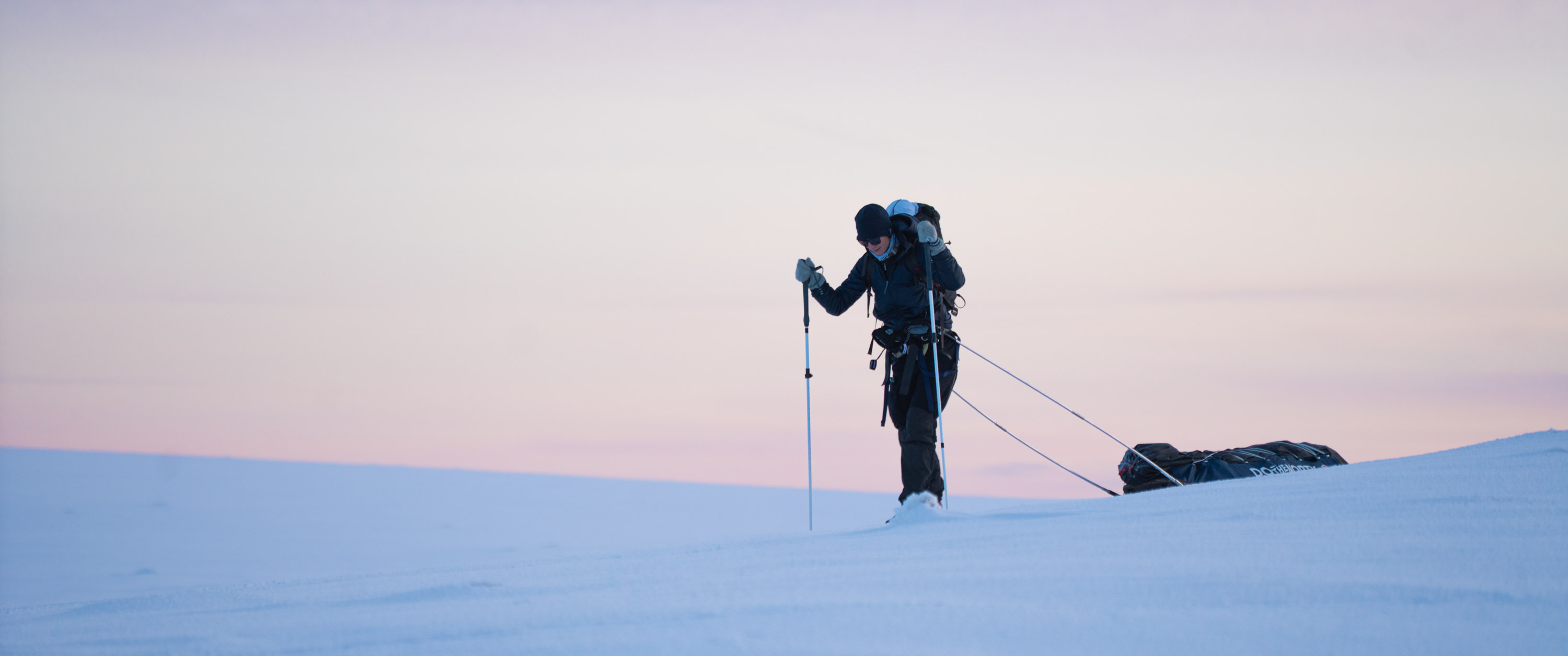
Schicht über Schicht
über Schicht
Bei Winteraktivitäten solltest du dich in Schichten kleiden, nach dem Zwiebelprinzip. Du musst in der Lage sein, deine Kleidung den Wetterbedingungen und dem Aktivitätsniveau anzupassen. Es gliedert sich wie folgt: Basisschicht, Mittelschichten und Außenschicht. Eine Mittelschicht, eine Fleecejacke oder ähnliches, kann ausreichend sein. Aber du möchtest zusätzliche Wärme während Pausen oder an besonders kalten Tagen (Verstärkungsschicht) – Kleidung, die bei intensiverer Aktivität ausgezogen werden kann, wie eine isolierte Daunenjacke.
Synthetische Basisschichten sind auch eine gute Alternative direkt auf der Haut. Ein Unterschied zu Basisschichten aus Wolle besteht darin, dass synthetische Basisschichten häufig gespült oder gewaschen werden müssen, um gut zu funktionieren und schlechte Gerüche zu vermeiden. Außerdem transportieren sie Feuchtigkeit besser als Wolle.
One evening, we’ll prepare an appetiser of smoked rare venison carpaccio with juniper mayonnaise, roasted rye breadcrumbs, spruce-pickled celeriac and cloudberries. A rather different treatment of ingredients that have been part of northern cooking for generations.
We’ll also head out onto the frozen lake to try ice fishing for Arctic char and trout. The fish is hot-smoked and served for lunch with ember-roasted leeks, pickled spruce shoots and sweet mustard caviar on crispbread.
Getting here is simpler than it sounds. The direct train from Stockholm to Mora takes about four hours, and on our trips we pick you up at the station and drive up the valley to the cabin. For trains and connections, see our guide Getting to and from Dalarna
Berries, roots and things that keep
Late summer and autumn are important seasons for gathering and preserving food. Lingonberries, blueberries and cloudberries are picked, mushrooms collected and root vegetables harvested before winter arrives.
One evening, we’ll serve lightly smoked and grilled reindeer fillet with Rättviksärt, a local heirloom field pea, alongside blueberry game jus and pickled blueberries. It’s a good example of how traditional ingredients can become something quite different in a contemporary dish.
We’ll also make use of pickled spruce shoots, juniper, pine vinegar and rowanberries. Some bring acidity, others sweetness or a slightly resinous flavour that works particularly well with game.
Basisschicht – leitet Feuchtigkeit ab
Die Schicht, die deinem Körper am nächsten liegt, ist die Basisschicht. Ihre Funktion besteht darin, Feuchtigkeit und überschüssige Wärme an eine äußere, aufnehmende Schicht weiterzugeben und dich trocken zu halten, während du aktiv bist. Wolle ist ein fantastisches Material für deine Basisschicht. Merinowolle und normale Schafwolle wärmen auch in feuchtem Zustand, atmen und funktionieren über viele Tage ohne Wäsche.
One evening, we’ll make our own version of palt, northern Swedish potato dumplings filled with salted pork and served with clarified butter and lingonberries. We’ll just make it a bit more delicate than the rustic original.
Another dish with humble origins is pölsa, a mixture of seasoned meat and grains. We’ll give ours a rather different treatment, crisp-frying it as an appetiser and serving it with ember-roasted beetroot, pine vinegar and quail egg.
We’ll also make our version of souvas, inspired by the Sámi tradition of lightly salted and smoked reindeer meat. Ours is a creamy preparation with onions and wild mushrooms, served with mashed potatoes and lingonberries. We’ll cook it out in the snow during a ski day in Norra Mora Vildmark. Properly hearty food for a winter day.
And on our final morning, we’ll cook kolbulle over an open fire. Traditionally eaten by forestry workers, it’s a simple, filling pancake made from flour, water and salted pork, fried until crisp on the Muurikka. Not doing a whole lot to it, because the original is so delicious! Impressive for a three-ingredient dish from the 1600s.
These dishes were born out of practicality, making the most of simple ingredients to create filling, satisfying meals. They’re still enjoyed in their original, rustic forms today, but they also lend themselves beautifully to more creative interpretations.
A whole day around the fire
One of the days is dedicated almost entirely to outdoor cooking at our cabin by Lake Navar.
We’ll start with brunch: potato waffles baked over the fire in long-handled waffle irons, a cooking method dating back to the Middle Ages. We’ll top them with gravlax, smoked jammy eggs and dill hollandaise. Our northern take on eggs Benedict. Admittedly, not the easiest dish to pull off with precise timings and the cold. But it's so delicious, so we're doing it anyway.
Then we’ll spend the day exploring different ways of cooking over fire, preparing dishes and ingredients we’ll enjoy both today and tomorrow. We’ll experiment with hot-smoking over smouldering logs, roasting vegetables directly in the embers and making our own mustard and rowanberry chutney for tomorrow’s tipi dinner.
For dessert this evening, we’ll turn a cast-iron pot hanging from a tripod over the fire into an oven. By placing burning logs on top of the lid, we create heat from above as well as below, baking an apple and dried plum pie right there in the pot.
There’s time for ice fishing, too, and an optional snowshoe hike up the tall hill behind the cabin. And as on every evening, the sauna will be waiting when we’re done.
Flatbread baking in Älvdalen
Flatbread baking has a long history in Älvdalen, where kavelgris, a thin rye flatbread flavoured with aniseed and fennel, has been made for generations.
Villages in this part of Dalarna often had a communal bakehouse with a huge wood-fired oven. Several families would gather for a whole day of baking, making large batches of flatbread to take home and store.
We’ll visit one of these old bakehouses, where a local baker will teach us how to prepare the dough, roll it remarkably thin and bake it in the wood-fired oven. Everyone gets to have a go, and naturally we’ll taste the results.
Later that evening, we’ll bring our freshly baked flatbreads along for dinner. Back in the Navar Valley, we’ll ski out to a tipi on a frozen lake and cook around the fire. We’ll serve our kavelgris with local sausages, ember-roasted onions, homemade apple mustard, pickled chanterelles and rowanberry chutney.
For dessert, we’ll have a much-loved Swedish classic: warm cloudberries with vanilla ice cream made right there in the snow. Then we’ll ski back to the cabin by headlamp.
Food tastes better cooked outdoors
There’s something so wonderful about cooking and eating good food outside in winter. The cold air, the smell of woodsmoke, the appetite you work up after a few hours on skis. And the particular satisfaction of preparing something delicious over an open fire, surrounded by snow.
Throughout the trip, we’ll cook in all sorts of settings. Lunch in the middle of a frozen forest, dinner around the fire in a tipi on a lake, and more elaborate preparations outside our cabin by Lake Navar. Most evenings, we’ll bring everything inside for long dinners around the table, with the wood stoves burning and candles lit.
There’ll be cocktails, a tasting of local beers, well-paired wines with dinner (of course, we have alcohol-free options too). And opportunities to get involved in the fire cooking, whether you’re an experienced home cook or simply someone who really enjoys good food.
We’re not trying to recreate exactly how people ate in Dalarna a hundred years ago. We’re taking inspiration from the ingredients, recipes and cooking techniques of the region, combining them with our own ideas and a healthy appetite for experimentation.
Great ingredients, plenty of creativity and plenty of fire
This is the food of Winter Flavours and Fire in Dalarna. For the cabin where we cook it and the land around it, see The Cabin and Exploring Our Surroundings.